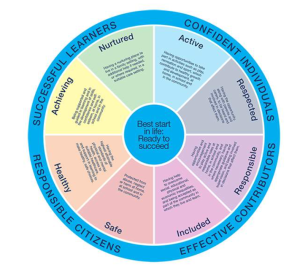
An important part of Getting it Right for Every Child is the National Practice Model.
The National Practice Model helps those who support children and young people to better understand their wellbeing needs. This makes sure the right support is provided at the right time.
Staff supporting children and young people should begin by using the GIRFEC Five Questions to identify what support might be needed:
1.What is getting in the way of the child or young person’s wellbeing?
2.Do I have all the information I need to help this child or young person
3.What can I do now to help this child or young person?
4.What can my agency do to help this child or young person?
5.What additional help, if any, may be needed?
Then continue by using the National Practice Model to gain a clear understanding of the child or young person’s strengths, rights, risks and vulnerabilities.
Below is a visual guide of the National Practice Model, which includes:
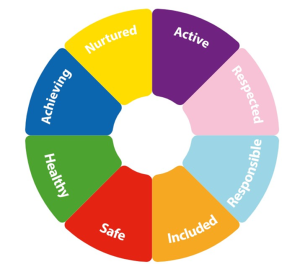
Commonly known as SHANARRI:
Safe, Healthy, Achieving, Nurtured, Active, Respected, Responsible, Included
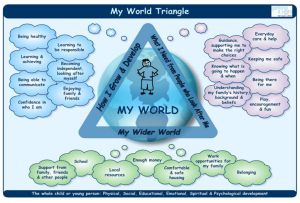
Considers the wholde child or young person by looking at your wider world, how you are growing and developing and what you need from the people who look after you.

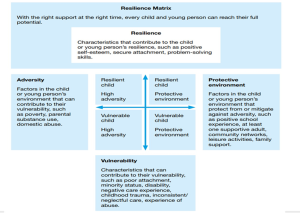
Looks at the qualities that help to bulld your resilience, such as postive self-esteem or problem solving skills etc

The four Curriculum for Excellence settings:
Home, School, Workplace and Community